



The Rise of STEM Education: Preparing Students for the Jobs of the Future
In recent years, STEM education (Science, Technology, Engineering, and Mathematics) has become a major focus in schools around the world. Educators and policymakers recognize that the modern workforce is rapidly changing, with increasing demand for professionals skilled in technology, problem-solving, and innovation. As a result, schools are adapting their teaching methods and curricula to better prepare students for careers in advanced scientific and technical fields.
Why STEM Education Is Gaining Importance
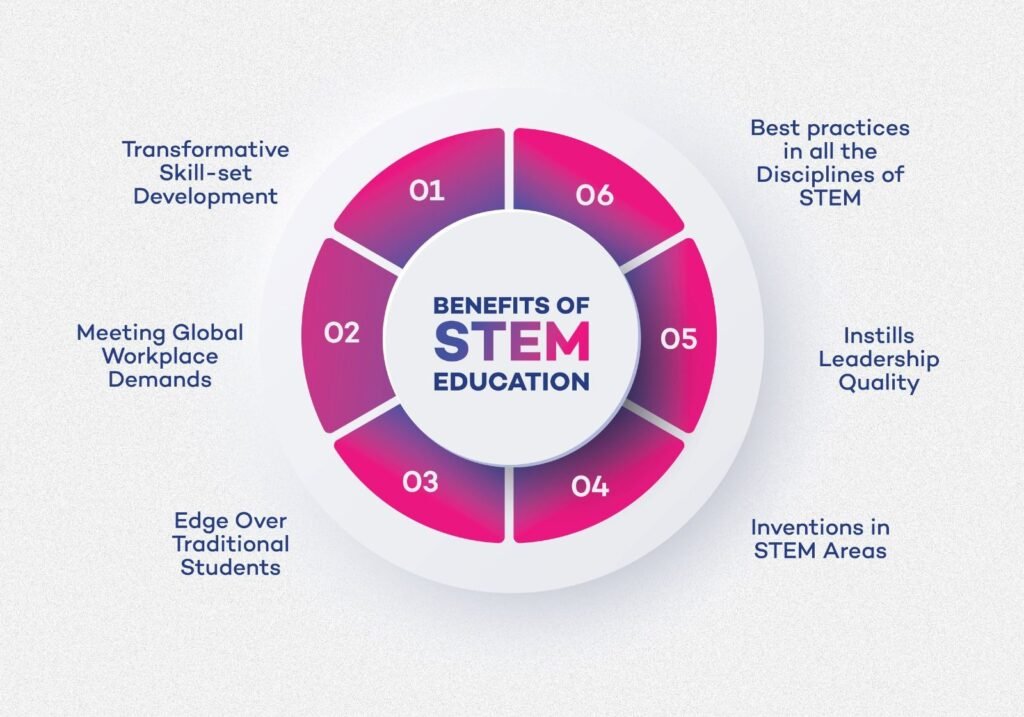
The rise of digital transformation, automation, and artificial intelligence has highlighted the need for a workforce with strong technical and analytical skills. STEM education aims to equip students with these essential abilities by encouraging hands-on learning, experimentation, and critical thinking. By introducing STEM concepts early, schools can help students develop a strong foundation that supports lifelong learning and career success.
Encouraging Problem-Solving and Creativity
One of the major strengths of STEM-based learning is its emphasis on problem-solving and creativity. Instead of memorizing facts, students are encouraged to explore real-world challenges and develop solutions through experimentation and teamwork. This approach helps students learn how to think independently, analyze data, and solve complex problems — skills that are valuable in almost every profession.
Hands-On Learning Through Projects and Technology
Modern STEM programs often include interactive activities, such as robotics competitions, coding workshops, engineering design projects, and science experiments. These hands-on experiences make learning more engaging and help students understand the practical applications of classroom lessons. By using tools like 3D printers, coding platforms, and lab equipment, students gain confidence and familiarity with the technologies shaping the future.
Preparing Students for High-Demand Careers
The growing emphasis on STEM education is directly tied to the job market of the future. Careers in fields like software development, biotechnology, engineering, cybersecurity, and renewable energy are expanding rapidly. These industries need skilled workers with strong technical knowledge and the ability to adapt to new technologies. STEM education helps students gain a competitive edge, opening doors to high-paying and meaningful career opportunities.
Promoting Inclusion and Diversity in STEM Fields
Another important goal of STEM education is to increase diversity in fields traditionally dominated by men, particularly in engineering and computer science. Schools are making efforts to encourage more girls and underrepresented students to participate in STEM programs by providing mentorship opportunities, scholarships, and supportive learning environments. A diverse STEM workforce fosters greater creativity, innovation, and equity in modern industries.
The Role of Teachers and Educational Support
Teachers play a crucial role in making STEM education effective. Professional training, updated teaching resources, and access to modern technology are essential for delivering quality STEM lessons. Schools and governments are investing in workshops and development programs to help educators stay informed about emerging scientific trends and digital tools, ensuring that students receive the most relevant and impactful education possible.
Building a Future-Ready Generation
As STEM education continues to grow, it is becoming clear that preparing students for the jobs of the future requires more than traditional teaching methods. By nurturing curiosity, encouraging innovation, and integrating real-world problem-solving into the classroom, STEM programs are shaping a new generation of thinkers and creators. Through sustained support and investment, schools can help students build the skills and confidence needed to succeed in a rapidly evolving world.